
No products in the cart.
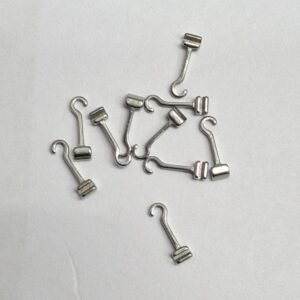
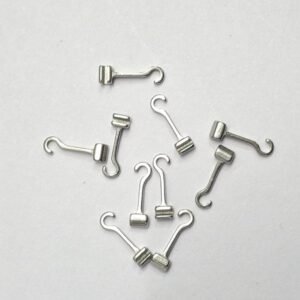
Lingual Sheath With Hooks (Right)

Roll over image to zoom in
₹ 290.00₹ 350.00 (-17%)
The lingual sheath is a metal or stainless steel tube that is placed on the inner (lingual) side of the teeth.
It is custom-made to fit the contours of the patient’s teeth, offering a discrete and secure base for orthodontic appliances.
It serves as an anchor for the attachment of various components that help in aligning the teeth.
Hooks:
Hooks are small protruding elements attached to the lingual sheath, positioned in a way that allows for the attachment of elastics or other orthodontic components.
The hooks are used to apply controlled force through rubber bands or elastics to correct bite problems, such as overbites, underbites, or crossbites.
These elastics help apply force to specific teeth or areas of the mouth to achieve better tooth alignment or to adjust the bite.
Material:
The sheath and hooks are usually made from stainless steel, titanium, or other strong, durable metals.
Stainless steel is often preferred due to its resistance to corrosion and its strength, ensuring the appliance can handle the forces applied during orthodontic treatment.
Purpose:
The main purpose of the Lingual Sheath with Hooks (Right) is to help correct bite issues and align teeth by providing anchorage for elastics or other appliances.
By being placed on the lingual side of the teeth, the appliance is less visible, offering a more aesthetic solution for patients who prefer discrete orthodontic treatment options.
Applications:
Lingual Braces: It may be part of lingual braces, which are placed on the inner surface of the teeth, making them invisible from the outside.
Elastic Attachments: The hooks are used to attach elastics that apply force to adjust the bite, which can improve alignment and correct bite problems.
Retainers: The sheath can also be used in permanent retainers, which are placed after braces to maintain the teeth in their corrected positions.
Advantages:
Discreet: The lingual sheath is placed on the inside of the teeth, making it invisible from the outside, ideal for patients seeking less conspicuous treatment options.
Precise Force Application: The hooks ensure that elastics or rubber bands are correctly positioned and can apply force accurately to the required areas.
Comfortable and Custom-Fit: The sheath is typically custom-fitted to each patient, ensuring a more comfortable fit with less irritation compared to other types of orthodontic appliances.
Considerations:
Initial Discomfort: Patients may experience some discomfort when the appliance is first placed, as it is positioned on the back (lingual) side of the teeth.
Oral Hygiene: Since the appliance is located on the inner side of the teeth, it can be harder to clean, making good oral hygiene practices crucial to avoid plaque buildup or discomfort.
Maintenance: Regular orthodontic visits are necessary to adjust the hooks, elastics, and ensure the appliance is functioning properly.



Reviews
There are no reviews yet.